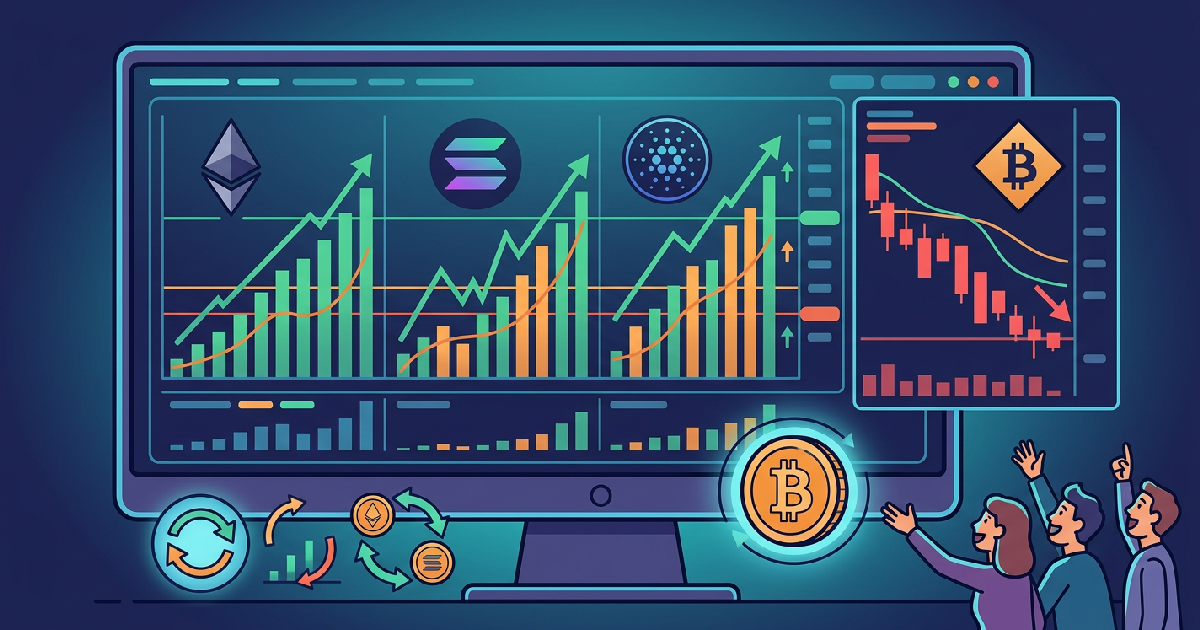
Investors are increasingly monitoring capital rotation patterns as they prepare for the next altcoin season, a market phase defined by a massive shift in liquidity from Bitcoin into alternative digital assets.
According to updated market metrics for June 15, 2026, an altcoin season occurs when 75% or more of the top 50 cryptocurrencies outperform Bitcoin over a rolling 90-day period.
This transition often leads to substantial price increases for assets like Ethereum (ETH), Solana (SOL), and Cardano (ADA) as traders seek higher returns outside of the primary cryptocurrency.
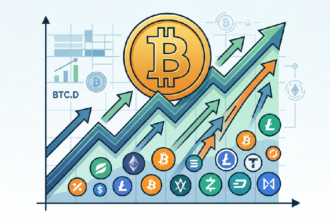
The mechanics of this shift rely heavily on Bitcoin Dominance (BTC.D), which measures Bitcoin’s market capitalization as a percentage of the total crypto market. When this percentage declines, it typically signals that capital is flowing into altcoins, marking the end of Bitcoin’s localized peak.
Investors who recognize these early signals can better manage the psychological pressure of FOMO (Fear Of Missing Out), which frequently leads to impulsive decisions during rapid price spikes.
Preparing for these cycles requires more than just watching charts; it involves a deep understanding of market phases, including accumulation, markup, distribution, and markdown. Strategic movement of capital, or rotation, usually begins with large-cap assets before trickling down into smaller, more speculative tokens.
By identifying these triggers, market participants can implement robust risk management strategies to protect their gains against the inherent volatility of the altcoin sector.
How to identify the start of an altcoin season
Identifying a true altcoin season requires tracking the performance of the broader market against Bitcoin’s relative stability. While many traders watch individual gains, the most reliable metric remains the rolling 90-day window. If three-quarters of the top 50 (or sometimes top 100) assets are outperforming Bitcoin, the market has officially entered a seasonal shift.
This broad-based growth distinguishes a true “altseason” from a isolated pump of a single meme coin or utility token.
Capital rotation is the primary engine behind these movements. Traders who have realized profits from Bitcoin’s “markup” phase often look for laggards in the altcoin market that have yet to experience similar growth. This behavior creates a domino effect where liquidity moves from the safest asset into progressively more volatile choices.
For a deeper look at these technical signals, you can read more about how an altcoin season is identified through specific market indicators.
The significance of Bitcoin dominance
Bitcoin Dominance serves as a thermometer for the entire ecosystem’s risk appetite. When BTC.D is high, it suggests a “risk-off” environment where investors prefer the relative safety of the original cryptocurrency.
Conversely, a sharp drop in dominance indicates a “risk-on” sentiment, where the market is willing to bet on the unique features and use cases of alternative coins. High dominance often precedes a major rotation event once Bitcoin’s price begins to plateau.
Understanding what Bitcoin dominance means for altcoins is vital for timing entries. Historically, altcoins struggle to gain ground while Bitcoin is in a parabolic uptrend. It is only when Bitcoin enters a consolidation phase that the “altcoin season” typically finds the liquidity necessary to sustain a wide-scale rally.
This period allows developers and ecosystem projects to showcase technological milestones that might have been ignored during a Bitcoin-only rally.
Essential metrics for cryptocurrency market comparison
To navigate the shift between Bitcoin and alternative assets, investors use several key data points. The following table highlights the differences between market phases based on capital flow and asset performance metrics confirmed by recent market data.
| Market Metric | Bitcoin Focused Phase | Altcoin Season Phase |
|---|---|---|
| Outperformance | BTC leads top 50 assets | >75% of top 50 outperform BTC |
| BTC Dominance (BTC.D) | Increasing or stable | Significant decline |
| Capital Flow | Inflow from fiat to BTC | Rotation from BTC to Altcoins |
| Investor Sentiment | Cautious accumulation | High FOMO and speculative buying |
Researching use cases and fundamental value
Not all alternative assets are equal, and distinguishing between those with “utility” and those driven by hype is a core part of preparation. Altcoins like Litecoin (LTC) or Dogecoin (DOGE) represent different ends of the spectrum, from established stores of value to community-driven assets. Investors focusing on longevity look for projects with specific consensus mechanisms or those solving scalability issues in decentralized finance (DeFi).
New financial products have also altered the market’s structure. For example, the impact of Ethereum ETFs on crypto has created a more accessible bridge for institutional capital. When major funds can gain exposure to altcoins through traditional regulated vehicles, it provides a level of legitimacy and liquidity that was absent in previous cycles.
This institutional involvement often acts as a stabilizer, preventing the total “washouts” seen in the early days of crypto trading.
Managing risk during high volatility
Altcoins are notoriously more volatile than Bitcoin, and the markdown phase can be devastating for those without a plan. Successful strategy involves setting clear exit points and avoiding the trap of emotional trading. Diversification across different sectors, such as Layer 2 scaling solutions, AI-integrated blockchains, and gaming protocols, helps spread risk if one specific sub-sector fails to perform during the season.
The Securities and Exchange Commission (SEC) continues to play a pivotal role in how these assets are categorized. Their regulatory decisions can influence which altcoins are seen as safe for institutional portfolios and which remain high-risk speculative plays. Keeping an eye on these legal developments is just as important as monitoring the price charts, as a single regulatory ruling can shift market sentiment overnight.
Frequently Asked Questions
Frequently Asked Questions
What percentage of altcoins must outperform Bitcoin to signal an altcoin season?
An altcoin season is defined as a period where 75% or more of the top 50 (or sometimes the top 100) cryptocurrencies outperform Bitcoin over a rolling 90-day window. This high threshold ensures that the rally is broad-based across the entire market rather than limited to a few specific tokens.
How does capital rotation influence price increases?
Capital rotation is the strategic movement of investment funds from one asset class to another. In the cryptocurrency market, this usually involves investors taking profits from their Bitcoin holdings after a price surge and reinvesting that capital into altcoins to pursue higher percentage gains during the next phase of the cycle.
Which role does Bitcoin Dominance (BTC.D) play in market cycles?
Bitcoin Dominance represents Bitcoin’s market capitalization as a percentage of the total crypto market. A decline in this metric is a primary indicator of an upcoming altcoin season, as it shows that capital is being redistributed into alternative assets like Ethereum, Solana, and other top-tier altcoins.