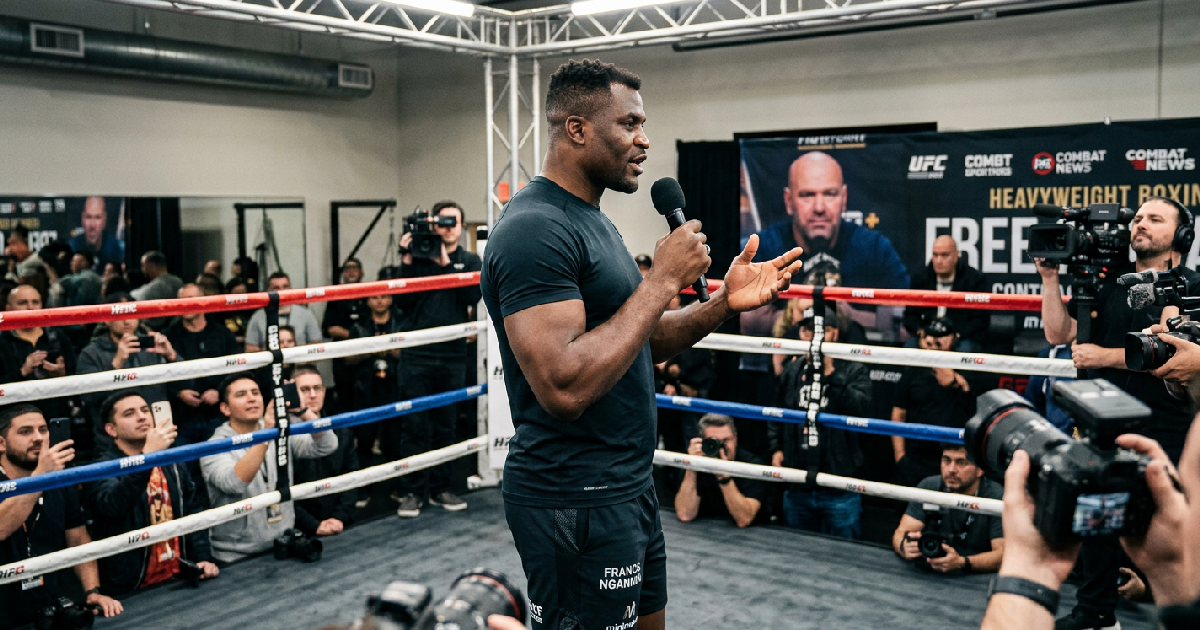
Former heavyweight champion Francis Ngannou has provided a detailed account of his high-profile exit from the Ultimate Fighting Championship (UFC), clarifying the administrative and personal friction that led to his move into professional boxing. The Cameroonian powerhouse reportedly reached a breakdown in negotiations centered on his request for athlete healthcare, the right to personal sponsorships, and a more flexible contract structure that would allow him to compete in other combat disciplines. These revelations come as the combat sports community continues to weigh the impact of his departure on both the mixed martial arts (MMA) and boxing landscapes.
The rift between Francis Ngannou and the UFC leadership reportedly became a significant power struggle in modern combat sports. By declining a contract extension that was described by some sources as potentially making him one of the highest-paid heavyweights in the promotion’s history, Ngannou appeared to prioritize long-term fighter advocacy over immediate financial gain. His departure eventually paved the way for a transition to the boxing ring, where he has since faced some of the biggest names in the heavyweight division.
Critics initially questioned the wisdom of leaving a secure championship platform, but the move appears to have shifted the leverage back toward individual athletes. This shift coincides with a broader change in the industry, as other promoters seek to capitalize on the vacuum left by disgruntled superstars. For instance, Dana White targets Haney and Stevenson for the reported launch of Zuffa Boxing, suggesting that even established MMA leadership recognizes the growing necessity of a heavy presence in the boxing market.
The Structural Divide and Contractual Constraints
According to reports regarding his exit, Francis Ngannou felt the UFC’s standard contractual terms were overly restrictive regarding an athlete’s career freedom outside of their active competition. He sought terms that included an advocate for fighter health insurance and the ability to bring his own sponsors into the cage — requests that were reportedly at odds with the promotion’s centralized business model at the time.
The champion’s insistence on these points was framed as a stand for future generations of fighters. By walking away while still holding the official championship, he became a rare example of a reigning titleholder to leave the organization. This act forced a reshuffling of the heavyweight division and set a new precedent for high-level free agency in the sport of mixed martial arts.
Boxing as the Strategic Alternative
The decision to pivot to boxing allowed Francis Ngannou to realize a goal that predated his rise in MMA circles. The transition carried risks, as many pundits believed top-tier heavyweights would outclass a combatant accustomed to the different mechanics of the cage. However, his competitive showings against elite talent proved that his punching power remains a variable in any format.
As the heavyweight scene continues to evolve, the crossover between MMA and boxing has become a staple of major pay-per-view events. The landscape is currently influenced by massive figures such as Oleksandr Usyk and Tyson Fury, whose rivalry keeps the division’s momentum high. Ngannou’s entry into this orbit changed the financial expectations for crossover stars, demonstrating that high-profile boxing matches could rival or exceed purses typically found in MMA.
Legacy and the Future of Combat Sports Autonomy
The fallout from Francis Ngannou’s departure continues to resonate through the offices of leading sports agents globally. His navigation of free agency has reportedly emboldened other fighters to test their value on the open market rather than settling for early contract renewals. This shift in power dynamics is visible across various weight classes as fighters increasingly look for deals that include multi-platform opportunities.
The precedent set here is particularly relevant for athletes nearing the end of their prime. While some figures have built careers on the intersection of entertainment and sport, Jake Paul has shown that the boxing market is increasingly open to non-traditional entrants. Ngannou, however, has maintained his status as a top-tier contender through athletic merit, challenging the notion that one specific organization is the only path to global stardom.
Looking ahead, the industry is closely watching how major promotions adapt their contracts to prevent similar high-profile exits. For more information on the evolving standards of professional fighter contracts and administrative disputes, athletes and fans often look to the Association of Boxing Commissions (ABC) for updates on regulatory changes across North America. Additionally, those monitoring official rankings can find updates through the World Boxing Council (WBC) regarding criteria for heavyweights entering their lists.
Impact on the Heavyweight Landscape
The departure altered the competitive trajectory of two sports. The UFC was forced to crown a new champion through internal competition, while the boxing world gained a fresh, marketable heavyweight with a significant international following. This global reach is a key component of why modern streaming giants express such high interest in combat sports events.
As negotiations for high-stakes matches continue, the model of self-representation and adherence to personal values serves as a blueprint for others. Whether he returns to MMA through his current various partnerships or remains a permanent fixture in the boxing ring, his exit from the UFC remains a defining moment for professional autonomy in the current era of combat sports. The ongoing dialogue between promoters and elite talent suggests that the nature of organizational control may be changing.