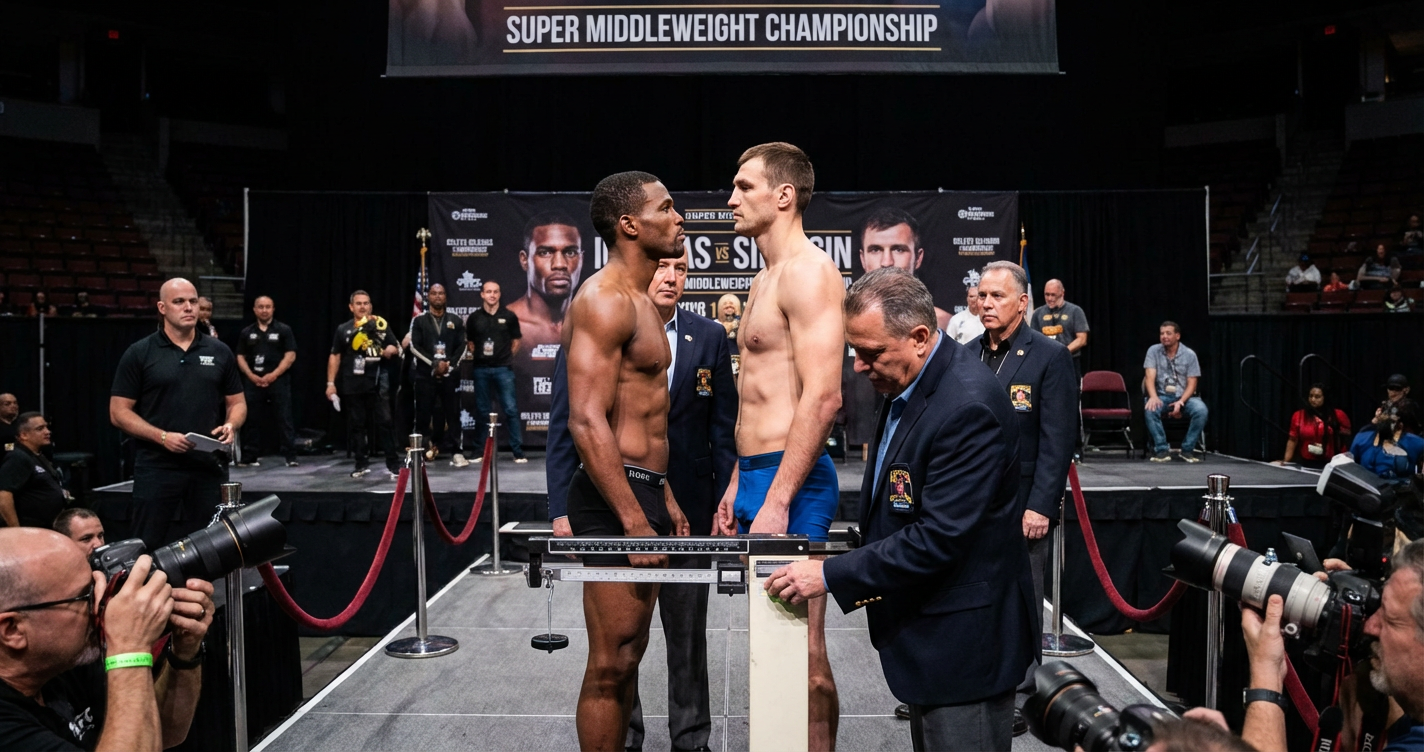
Super middleweight riser Osleys Iglesias and contender Pavel Silyagin have both met the weight limit for their upcoming meeting, clearing the final administrative hurdle before one of the division’s more intriguing stylistic matchups. Both fighters appeared to be in peak physical condition during the official proceedings, reinforcing the stakes attached to a bout that could influence the 168-pound hierarchy.
For Iglesias, this represents a significant moment in a career that has gained steady momentum. The Cuban-born fighter has developed a reputation for technical poise, dismantling several opponents on his way up the rankings. However, in Silyagin, he faces a seasoned operator with an amateur pedigree that makes him a difficult puzzle for many power punchers to solve. The clash of Iglesias’s aggression against Silyagin’s calculated style has drawn focus from those tracking the heavyweight unification era and the ripple effects such shifts have on the surrounding weight classes.
Establishing Division Standing
The importance of this bout extends beyond the immediate rankings. At 168 pounds, the presence of undisputed champions often makes it difficult for rising contenders to break through, making it vital for athletes to deliver convincing performances to remain in the conversation for major opportunities. Iglesias has been described by some observers as a formidable threat in the division, a reputation built on high-impact finishes and a relentless pace. Maintaining activity against ranked opponents like Silyagin is seen as a primary route to securing a shot at the division’s elite names.
Silyagin brings a different approach to the ring. His movement and ability to control distance have frustrated previous opponents. He rarely finds himself out of position, and his stamina reportedly allows him to maintain a consistent work rate into the later rounds. For Silyagin, this fight is an opportunity to prove that technical mastery can neutralize the power that has become Iglesias’s calling card. This pursuit of a defining win mirrors the dedication seen in other areas of the sport, such as how Lauren Price outlines plan for her own future by focusing on consistency and high-level opposition.
The Battle of Styles
Analysts often view these types of pairings as a litmus test for a prospect’s ceiling. Iglesias has rarely been pushed into the deep water of the later rounds, often ending fights early. Silyagin is regarded as the type of fighter capable of taking an opponent into those uncomfortable late stages. If the Cuban cannot find a home for his power in the opening half, the fight could transform into a grueling technical contest where mistakes are punished by Silyagin’s jab.
The atmosphere at the weigh-in suggested mutual respect, with both camps appearing focused. There were no theatrics; instead, the energy reflected two athletes who understand the consequences of a setback at this stage of their careers. While some of the boxing world’s attention is currently on crossover spectacles, such as the way Jake Paul targets women’s boxing growth through his promotional efforts, the Iglesias-Silyagin matchup serves as a reminder of the sport’s traditional appeal: two professionals competing for a path toward the top of their weight class.
Evaluating the 168-Pound Landscape
The winner of this meeting is expected to improve their standing within the sanctioning body rankings. As the sport moves toward a period where belts are being consolidated and mandatory challengers are being monitored more closely, timing and activity are vital. A convincing performance for Iglesias could potentially move him toward a world title eliminator in the future. Conversely, a victory for Silyagin would likely stall the momentum Iglesias has built and re-establish the Russian as a top contender at super middleweight.
With both men officially on weight, the focus shifts to the tactical battle inside the ring. In a division that can sometimes be slowed by promotional politics, this matchup offers a rare degree of competitive clarity. It is the kind of pairing that boxing purists often champion, as it pits two distinct styles against one another to determine who is ready for the next level of the sport.