The heavyweight division has often been a theater of the absurd, but the latest chapter in the Tyson Fury and Anthony Joshua saga has left fans feeling more exhausted than exhilarated. Following reports of Fury’s recent appearance at Tottenham Hotspur Stadium, the familiar drums of a domestic mega-fight began to beat once again. Yet, for many who have followed this rivalry since it first began to simmer years ago, the noise feels increasingly hollow.
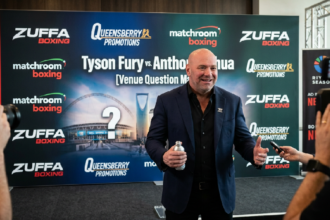
The evening was supposed to deliver an announcement that would clarify the top end of the division. High-ranking figures in the sport had teased a revelation that would shift the current orbit of the heavyweights, and rumors quickly coalesced around a potential agreement for the all-British showdown. But as the lights dimmed in North London, the reality was far more disorganized. What was intended as a grand reveal transitioned into a series of awkward exchanges that suggested the two camps are still not reading from the same script.
A chaotic scene in North London
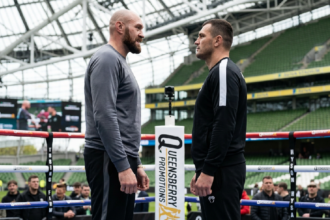
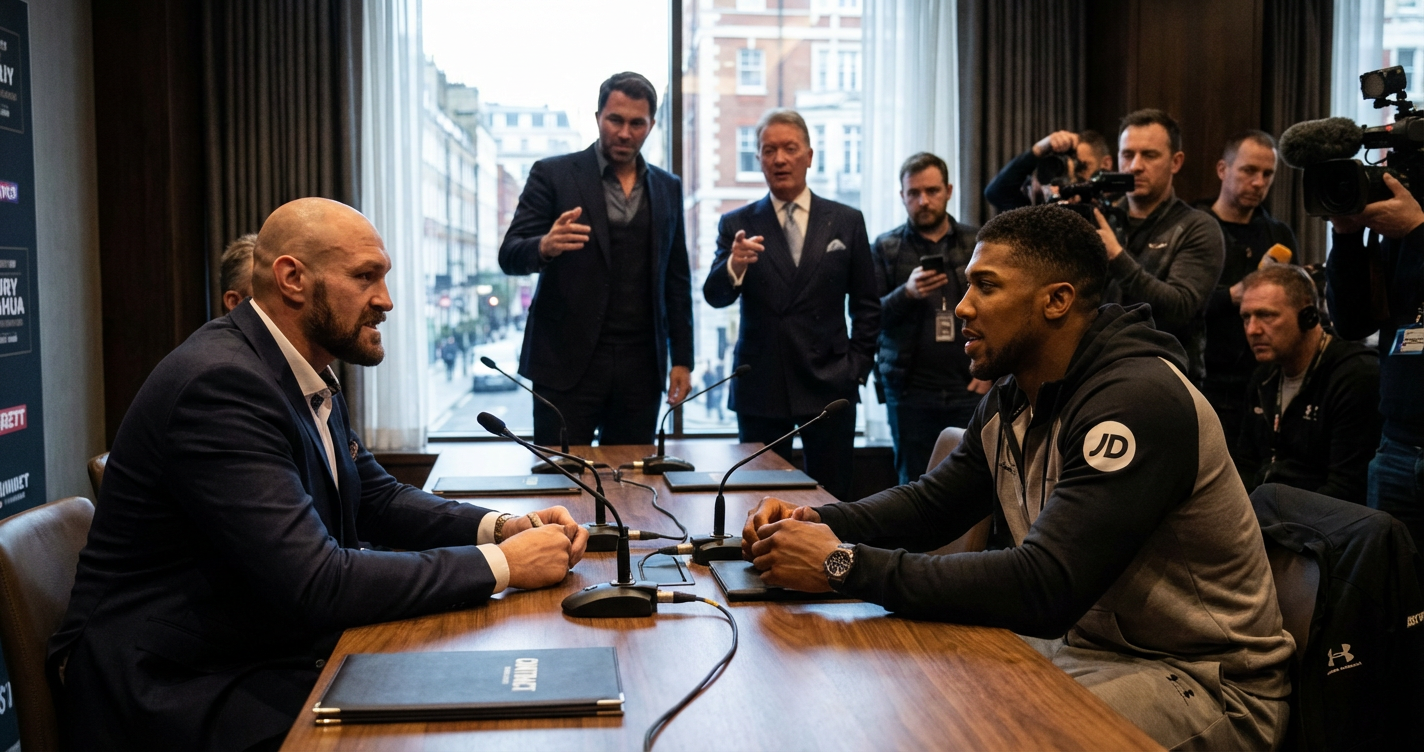
The post-fight spectacle saw Anthony Joshua invited into the ring to face off with Fury. The imagery was exactly what television executives crave, but the execution struggled. Joshua, holding a microphone that appeared to have technical issues, could only look on while Fury, clearly energized by his recent activity, attempted to address the crowd and his rival. While the two exchanged words away from the main audio feed, the body language told a story of disconnection.
Joshua’s promoter, Eddie Hearn, appeared less than certain about the proceedings, later indicating that a final deal had not been reached. This stands in contrast to Fury’s own public stance. Following the event, the “Gypsy King” has been vocal about his desire to move forward, even suggesting that his side of the paperwork has been processed for some time. Fury’s promoter, Frank Warren, has hinted that while their side is ready, the other half of the deal remains outstanding.
This cycle of public challenges and private stalls is becoming a wearying trend. It mirrors the uncertainty seen in other corners of the sport, such as the hurdles facing a potential Wilder and Joshua bout, where negotiations often face complications just as they reach a critical stage.
The Boy Who Cried Wolf
The metaphor of the boy who cried wolf is beginning to define this era of heavyweight boxing. Over the last several years, the public has been told on multiple occasions that a deal for a major championship fight was imminent, only for administrative hurdles or legal complications to pull the fighters in different directions. Every time an announcement is teased, the currency of “breaking news” in the heavyweight division devalues further.
For fans, the frustration stems from the perception that the peak of this rivalry may have already passed. At one stage, both men held the major world titles and carried momentum that made a clash feel like the biggest event in the history of British sport. Now, with the division looking toward a new generation of contenders and both men having navigated recent career highs and lows, some of that luster has inevitably dimmed.
Despite the skepticism, there is a sense of inevitability fueled by the significant investment being injected into the division’s biggest events. Managers and promoters like Spencer Brown remain optimistic that the fight will happen eventually, pointing to the facts that the financial incentives are hard for either fighter to ignore. This aligns with a broader trend where international interest is keeping long-dormant rivalries alive, much like the recent heavyweight encounter involving Deontay Wilder that captured public attention despite both participants being in the veteran stages of their careers.
The ticking clock for British boxing’s biggest stars
Time is the one opponent neither Fury nor Joshua can outbox. As they move deeper into their thirties, the window for a culturally defining match-up is closing. The sport is currently grappling with a broader debate on retirement age and safety limits, and both men have frequently discussed the prospect of their eventual exit from the ring.
Fury’s recent outings have suggested he still possesses the movement and tactical mind that defined his championship reigns, but the landscape is shifting quickly. Younger heavyweights are beginning to force their way into mandatory positions, and the bureaucracy of the governing bodies may soon prioritize those fresh challengers over a legacy domestic bout that has spent years in the making.
While some veterans are finding ways to extend their careers, the demand for Fury vs Joshua rests on it being a fight for supremacy rather than a ceremonial exhibition. The intensity of previous negotiations shows that the stakes remain high for their respective legacies, regardless of whether every world title is on the line when they finally meet.
What happens next for the heavyweight giants
The immediate future depends on whether Eddie Hearn and the Joshua camp view the current terms as viable and secure. If the signatures are truly missing from one side of the contract, the “mega-fight” remains nothing more than a marketing concept designed to keep the public engaged. Fury has made it clear he has little interest in staying idle, placing the ball firmly in Joshua’s court if a showdown is to materialize next.
For the thousands of fans who watched the confusing scenes in London, the message was clear: believe it when the first bell rings, and not a moment sooner. The heavyweight division has promised much and delivered sporadically over the last few years. If Fury and Joshua are to avoid becoming the biggest “what if” in British boxing history, the talking has to find its resolution in a signed contract and a physical ring. Until then, the boy will continue to cry wolf to an increasingly skeptical audience.