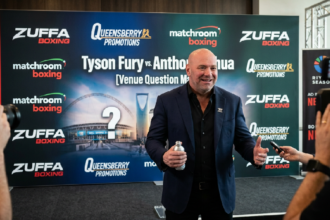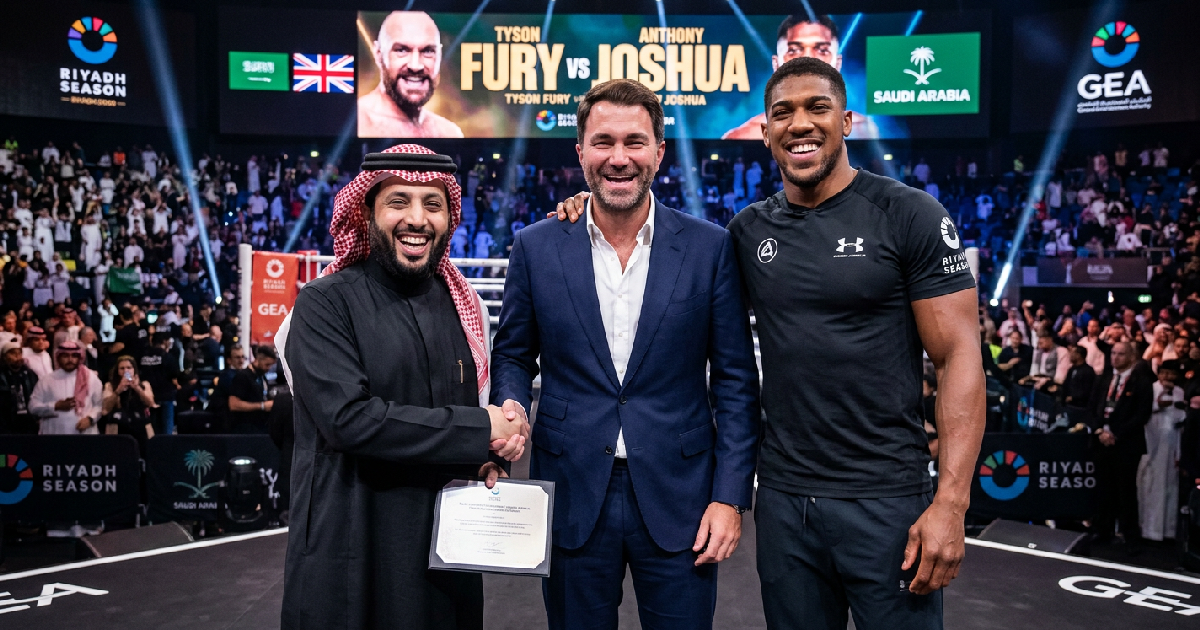
Turki Alalshikh has signaled a definitive shift in the boxing power dynamic by celebrating progress toward the long-awaited heavyweight clash between Tyson Fury and Anthony Joshua. Taking to social media following reports of a breakthrough in negotiations, the chairman of Saudi Arabia’s General Entertainment Authority shared a pointed image featuring himself alongside promoter Eddie Hearn and Joshua. The post included a caption aimed at critics who doubted his ability to secure the historic British encounter.
The post serves as a high-profile victory lap for a figure who has rapidly become the sport’s most influential power broker. By indicating that the path is now clear for the domestic rivals to meet, Alalshikh appears to have bridged a gap that has led to a decade of failed negotiations between rival camps. The fight is reportedly expected to take place in London, with some reports suggesting a potential broadcasting partnership with a major streaming platform, marking a potential departure from traditional pay-per-view models.
For years, boxing fans watched as broadcast rivalries, promotional egos, and financial disagreements stalled this specific matchup. Recent reports suggested that Anthony Joshua had been offered a two-fight deal linked to a Fury showdown, but it was Alalshikh’s intervention that simplified the complex legal and commercial web surrounding the two former champions. His social media activity suggests he views this success as a personal vindication against those who argued that veteran promoters would never allow a third party to take such total control.
The Visual Power Shift in Boxing Management
The photograph shared by Alalshikh is being interpreted by industry observers as a statement on the sport’s new hierarchy. In the image, Eddie Hearn—who for years acted as the primary architect of Joshua’s career—is captured alongside Alalshikh, who remains at the center of the frame. The composition paints a vivid picture of the current landscape, positioning established promoters as essential partners in a vision increasingly dictated by Saudi-led initiatives.
This public display highlights how quickly traditional gatekeepers have had to adapt to the Saudi influence. While Hearn has maintained his status as a top-tier negotiator, recently having secured a new deal with a pound-for-pound star, the momentum behind the Fury-Joshua fight suggests that Alalshikh is now the one setting the international calendar. It is a reminder that the hurdles which once prevented this fight were not immovable when met with the necessary financial backing and centralized leadership.
Challenging the Traditional PPV Guard
The possibility of moving such a massive bout to a subscription-based streaming giant like Netflix would be one of the most disruptive maneuvers in recent boxing history. For decades, the sport has relied heavily on specialized sports networks and high-cost, one-off digital purchases. By treating the heavyweight championship as a global entertainment property rather than a niche sporting event, the General Entertainment Authority is reaching for a broader demographic.
This strategy aligns with efforts to expand the sport’s reach beyond its core audience. Even figures like Jake Paul have used similar strategies to bypass old-school boxing politics by focusing on digital engagement and cross-over entertainment value. Alalshikh appears to be applying that same logic to the elite level of the heavyweight division, ensuring that Fury and Joshua will be seen by an audience that extends far beyond the traditional boxing community.
Addressing the Doubters and Moving Forward
Alalshikh’s choice of words in his recent posts appears to be a direct response to narratives that plagued his early entry into the sport. Skeptics originally claimed that while Saudi involvement could fund individual events, it could not fix a fractured promotional system. By navigating the logistics of the single most demanded fight in the United Kingdom, he has effectively challenged that argument by bringing former rivals to the table.
The focus now shifts to the eventual scheduling of the showdown, which is being targeted for the coming year. While Joshua may take a stay-busy fight in the interim to remain active, the long-term objective is now seemingly secured. The confidence displayed by officials today signals a transition into an era where the terms of major fights are increasingly influenced by a centralized authority, marking a significant departure from the era of bickering promotional houses. For Tyson Fury and Anthony Joshua, the long road to a Wembley showdown finally appears to have a definitive map.