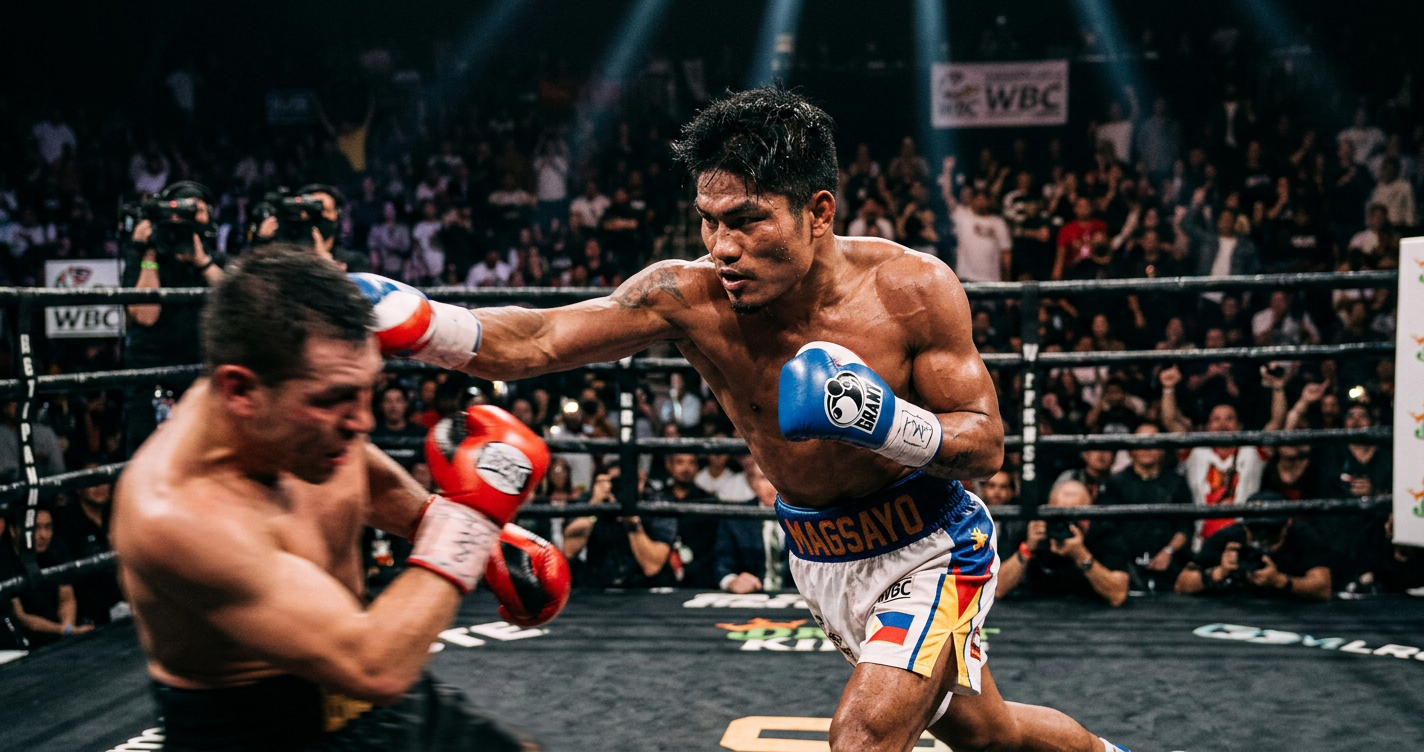
Mark Magsayo is at a crossroads. The heavy-handed Filipino puncher, known to the boxing world as “Magnifico,” has moved up to junior lightweight after a career defined by both explosive peaks and narrow valleys at 126 pounds. In a recent retrospective with Boxing Scene, the former WBC featherweight champion took a moment to look back at the five fights that defined his journey from a raw prospect in Tagbilaran City to a world titleholder on the global stage.
Every fighter has a transformation point. For Magsayo, that arc isn’t just about technical growth; it’s a story of surviving the pressures of being labeled “the next Manny Pacquiao” while carving out an identity that is uniquely his own. Through these five bouts, he illustrates how a fighter learns to trade youthful aggression for the discipline required at the elite level.
The Ceja Comeback and the Path to the Belt
Before he could touch world honors, Magsayo had to survive Julio Ceja. It remains one of the most dramatic spectacles in recent featherweight history. Magsayo started fast, dropping Ceja early, but the veteran broke him down meticulously, eventually flooring the Filipino and leaving him trailing on the cards as the fight entered the championship rounds.
But that tenth round changed everything. Magsayo found a right hand that didn’t just end the fight; it sent Ceja down in a heap and arguably saved Magsayo’s career trajectory. It was the moment he proved his power could bail him out when his stamina and defense faltered. More importantly, it set the stage for his date with destiny against a long-reigning champion.
Ending the Reign of Gary Russell Jr.
The win over Gary Russell Jr. remains the crown jewel of Magsayo’s resume. Russell had held the WBC title for nearly seven years, largely due to a defensive brilliance that few could touch. While much was made of Russell’s shoulder injury during the fight, Magsayo’s aggression and work rate were the factors that forced the aging champion into uncomfortable territory.
By taking the majority decision, Magsayo became the latest in a long lineage of Filipino world champions. It was a performance of composure. He didn’t just hunt for the knockout that served him against Ceja; he boxed with enough discipline to take rounds from shoeshine master like Russell. For Magsayo, that night represented the realization of a lifelong ambition fueled by his upbringing in the Philippines.
Lessons from the Rey Vargas Setback
Boxing is rarely a straight line of success. Magsayo’s reign was short-lived, ending in his first defense against the tall, rangy Rey Vargas. It was a fight that exposed the limitations of Magsayo’s reach and his tendency to follow opponents rather than cut off the ring. Despite scoring a knockdown, the split-decision loss was a bitter pill to swallow.
Reflecting on that fight, it’s clear Magsayo views it as a tactical education. Vargas utilized every inch of his frame to frustrate the champion. While some observers felt the fight was close enough to go either way, the loss forced Magsayo to look at his conditioning and his ability to deal with movement—a recurring theme as he navigates the 130-pound division today.
Transitioning to 130 Pounds
The move up in weight wasn’t just a choice; it was a physical necessity. Magsayo fought through several camps where making 126 pounds stripped him of the explosive energy that makes him dangerous. His more recent outings at junior lightweight suggest a fighter who has retained his power while gaining a bit more durability.
The 130-pound landscape is crowded. It lacks the singular dominance seen in other divisions, which opens a door for a puncher of Magsayo’s caliber. His focus remains on becoming a two-weight world champion, a feat that would solidify his legacy among the greats of Philippine boxing history. He isn’t interested in tune-up fights; he’s looking for the names that will move him back into the title picture.
The Identity of a Power Puncher
And so, the “Magnifico” moniker remains fitting for a fighter who prioritizes excitement. Magsayo acknowledges that his style often leads to wars, but he has become more cognizant of the need for longevity. Training under the tutelage of Marvin Somodio and previously Freddie Roach, he has tried to refine the wilder swings of his youth into a more structured offensive output.
As he looks back on these defining moments, Magsayo clearly sees them as building blocks rather than just memories. Whether he is overcoming a knockdown or defending a title, the common thread is a refusal to be outworked. In the coming months, the boxing world will see if the lessons learned at featherweight translate into another title run at junior lightweight. One thing is certain: when Mark Magsayo steps in, the fight rarely goes the distance without a significant amount of drama.