In the lead-up to the highly anticipated rematch between Katie Taylor and Amanda Serrano, combat sports journalist Ariel Helwani has offered a rare look back at the origins of his obsession with the fight game. While today he is synonymous with the rapid-fire world of digital media and mixed martial arts, Helwani’s roots reach back to a different era: the high-gloss, cinematic heyday of HBO Boxing.
The upcoming Taylor-Serrano clash represents a collision of worlds that Helwani has navigated throughout his career. As women’s boxing prepares for another milestone event, the veteran reporter has been vocal about how his early exposure to the legendary “World Championship Boxing” broadcasts shaped his approach to storytelling. For Helwani, the spectacle isn’t just about the punches thrown; it’s about the narrative arc that leads two athletes to the center of the ring.
The HBO Blueprint and the Golden Era
For those who followed the sport during the 1990s and early 2000s, HBO was more than just a broadcaster. It was the gold standard. Helwani has frequently cited the production quality, the iconic voices of Jim Lampley and Larry Merchant, and the intimate “24/7” shoulder programming as his primary education in sports media.
That era of boxing leaned heavily on the “Big Fight” feel—a sense of gravity that many feel has been diluted in the modern age of fragmented streaming services and sanctioning body politics. Helwani’s journey from a fan of the HBO era to a central figure in the Taylor-Serrano promotion highlights a shift in how the sport is consumed. Rather than sitting behind a premium cable paywall, the modern pugilistic landscape thrives on viral moments and crossover appeal.
But the fundamentals of the HBO era remain. The ability to make a casual viewer care about the stakes of a fight is a skill Helwani has carried into his modern work. When he speaks about Taylor and Serrano, he isn’t just reciting records; he is framing a legacy-defining moment that mirrors the great rivalries of his youth.
Taylor vs Serrano and the Modern Spectacle
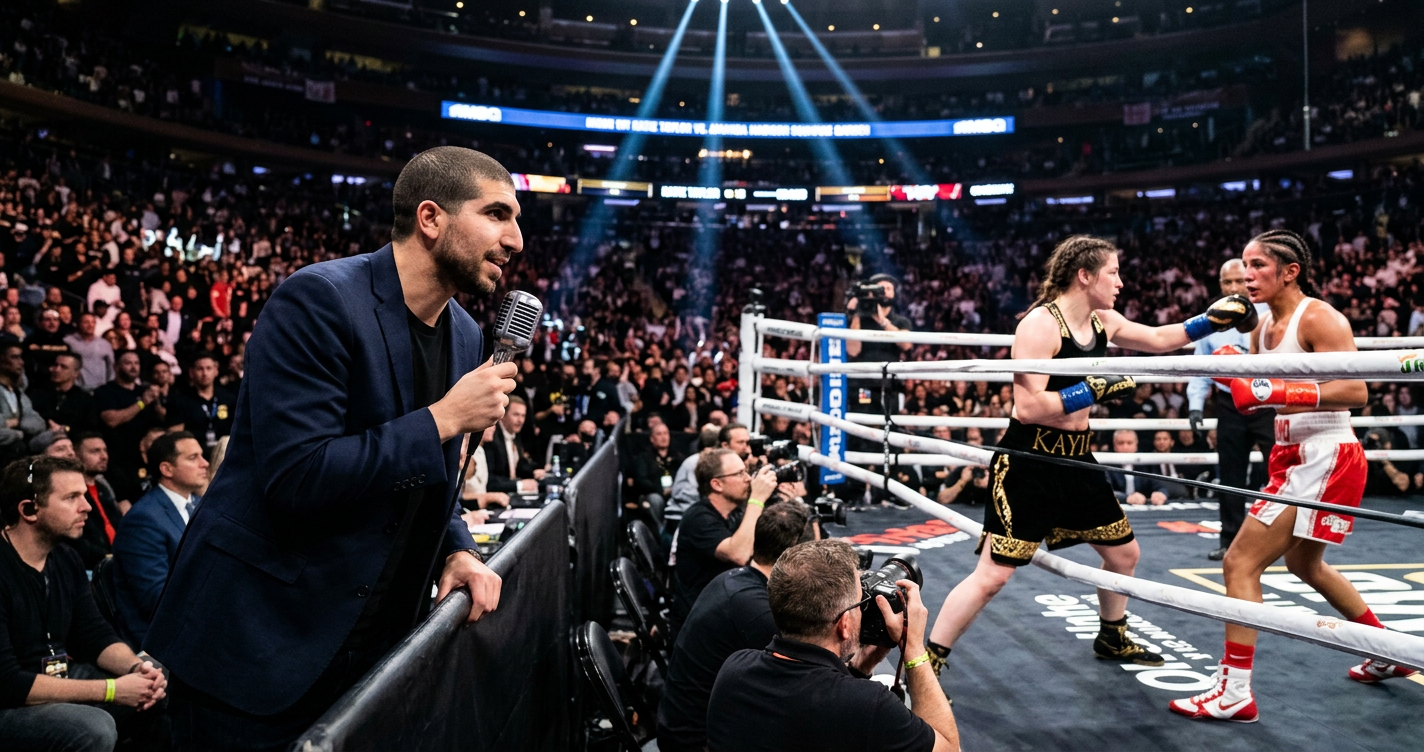
The first meeting between Katie Taylor and Amanda Serrano at Madison Square Garden was a watershed moment for the sport. It proved that women could headline the world’s most famous arena and produce a Fight of the Year contender. For a journalist like Helwani, who has spent years advocating for better coverage of female fighters, the event served as a validation of his long-held beliefs.
The rematch carries even more weight. In a period where boxing often struggles to make the “best vs. best” fights happen, Taylor and Serrano have become the exception. Their willingness to face one another again, despite the risks to their respective rankings, harkens back to the era Helwani grew up watching—where champions didn’t hide behind advisors and carefully curated paths to undisputed status.
And while the platforms have changed from cable giants to digital incumbents, the core of the appeal remains the same. Helwani’s involvement in the promotion brings a specific type of energy that bridges the gap between traditional boxing purists and the younger, MMA-centric audience he largely commands.
Shifting Dynamics in Combat Sports Coverage
Helwani’s transition from a “massive HBO boxing fan” to a media powerhouse reflects a broader change in the industry. The monopoly on sports narrative has shifted away from a few select networks and into the hands of individual personalities and independent platforms.
He often discusses the “lost art” of the post-fight interview—a staple of the HBO experience. The ability to ask the hard questions while the sweat is still drying on the fighters’ brows is something Helwani has mastered, often to the chagrin of promoters. In the lead-up to Taylor-Serrano, that same investigative edge is what fans expect. They don’t just want a press release; they want to know the internal motivations driving the champions.
The significance of Taylor-Serrano isn’t limited to the ring results. It is about the commercial viability of women’s sports at the highest level. Helwani has noted that the groundwork laid by pioneers in both boxing and MMA has finally culminated in a moment where a female bout is undeniably the biggest draw on the calendar.
A Legacy in the Making
As the date for the rematch approaches, the narrative around Taylor and Serrano continues to grow. It is a story of national pride, technical mastery, and the sheer will to win. For Helwani, being a part of this journey is a full-circle moment. The kid who sat in front of the television watching Arturo Gatti and Micky Ward is now the one chronicling the modern equivalent.
The boxing world is notoriously difficult to navigate, with its internal politics and shifting loyalties. However, by leaning into the storytelling techniques perfected by HBO and injecting them into the modern digital ecosystem, Helwani has found a way to keep the spirit of that “golden era” alive. Whether Taylor or Serrano emerges victorious, the event itself serves as a reminder that when the right story is told, boxing remains the most compelling drama in sports.