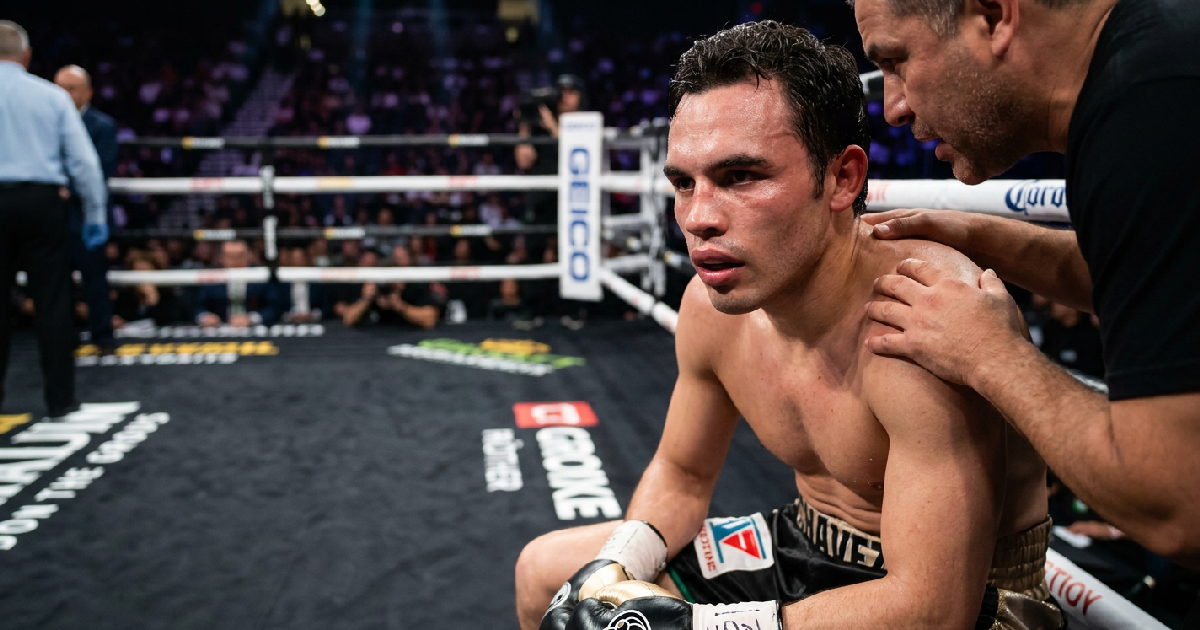
Julio César Chávez Jr. has reportedly moved a step closer to a cruiserweight title push following his latest ring appearance against Jhon Caicedo. The veteran Mexican fighter is said to have secured a victory that has immediately sparked discussions regarding his viability in a heavier weight class. According to initial reports from the event, Chávez Jr. managed to control the pace of the contest, leading to an early conclusion that suggests he has successfully transitioned to the cruiserweight limit.
The result marks a potential turning point for the former middleweight champion, whose recent years have been defined by sporadic activity and various challenges outside the ropes. By finding a way past Caicedo, the seasoned campaigner has signaled an intent to move beyond the comeback phase and toward legitimate contention. Observers noted that the performance appeared to support recent claims from his camp regarding his improved physical condition and focus under new training parameters.
While the bout was viewed by many as a necessary step to shake off ring rust, the reported manner of the win suggests that the “Chávez” name still carries weight in the divisional hierarchies. He appeared comfortable hauling the extra mass required for this weight class, showing few signs of the fatigue that had occasionally hindered his performances during his later years at light heavyweight. This strategic shift mirrors the career trajectories of several other veteran stars, such as when Jake Paul details plan for professional boxing return by targeting high-impact matchups over traditional developmental paths.
Chávez Jr. Targets Elite Names for Possible Title Run
In the aftermath of the contest, reports surfaced that Chávez Jr. is already looking toward the biggest available targets in and around his new weight class. Names like David Benavidez and Gilberto “Zurdo” Ramírez have been mentioned as potential future opponents. Both men are currently considered elite figures in the higher weight divisions, and any such pairing would represent a significant escalation in competition for the 38-year-old Mexican.
The pursuit of these high-profile domestic clashes reflects a renewed ambition. His team has reportedly been exploring various legislative paths toward a cruiserweight sanctioning body opportunity, believing his frame can carry the 200-pound limit more naturally than the 160-pound limit where he first found fame. This evolution in his career comes at a time when the division is looking for fresh narrative threads and bankable names.
But the path to a title is rarely linear, especially for a fighter with a long history of inactivity. The cruiserweight landscape is currently revitalized by new talent and established champions. For Chávez Jr. to force his way into a championship bout, he may need to secure additional victories against ranked contenders. This focus on consistency is a challenge shared by many in the sport, much like how Calvin Moyo targets a busy professional schedule to remain relevant in a competitive market.
Adapting to the Physical Demands of the Weight
The transition to cruiserweight is a complex process that involves more than just eating more; it requires a delicate balance of power and stamina. Reports from the Caicedo bout suggest that Chávez Jr. utilized a steady jab and focused on body work to dictate the terms of the engagement. By finding an opening to end the night early, he avoided the potential pitfalls of a long, grueling battle that could have tested his gas tank.
This physical refinement is reportedly the result of a more disciplined approach to his recent training camps. Some analysts have suggested that for the veteran to reach the next level, he might benefit from the high-intensity environments used by other top-tier fighters. This concept of cross-training or seeking fresh air in elite gyms was recently highlighted when Anthony Joshua reportedly gained a lift training with Oleksandr Usyk, a move that often helps veterans find a second wind late in their careers.
Challenges on the Road to a World Championship
Despite the optimism surrounding this latest victory, heavy political hurdles remain in professional boxing. Both Benavidez and Ramírez have their own mandatory obligations and unification goals that may not immediately include a veteran looking for a shortcut to the top. For Chávez Jr., the task will be to prove that his performance against Caicedo was not an outlier but the start of a sustained run of form.
Activity remains the biggest question mark. In the coming months, the boxing world will be watching to see if the Mexican star can maintain a frequent fighting rhythm. To stay in the conversation for a major title, the former champion cannot afford long hiatuses between appearances. The immediate future likely involves a return to the negotiating table to see which promoters are willing to gamble on a second revival for one of boxing’s most famous surnames.