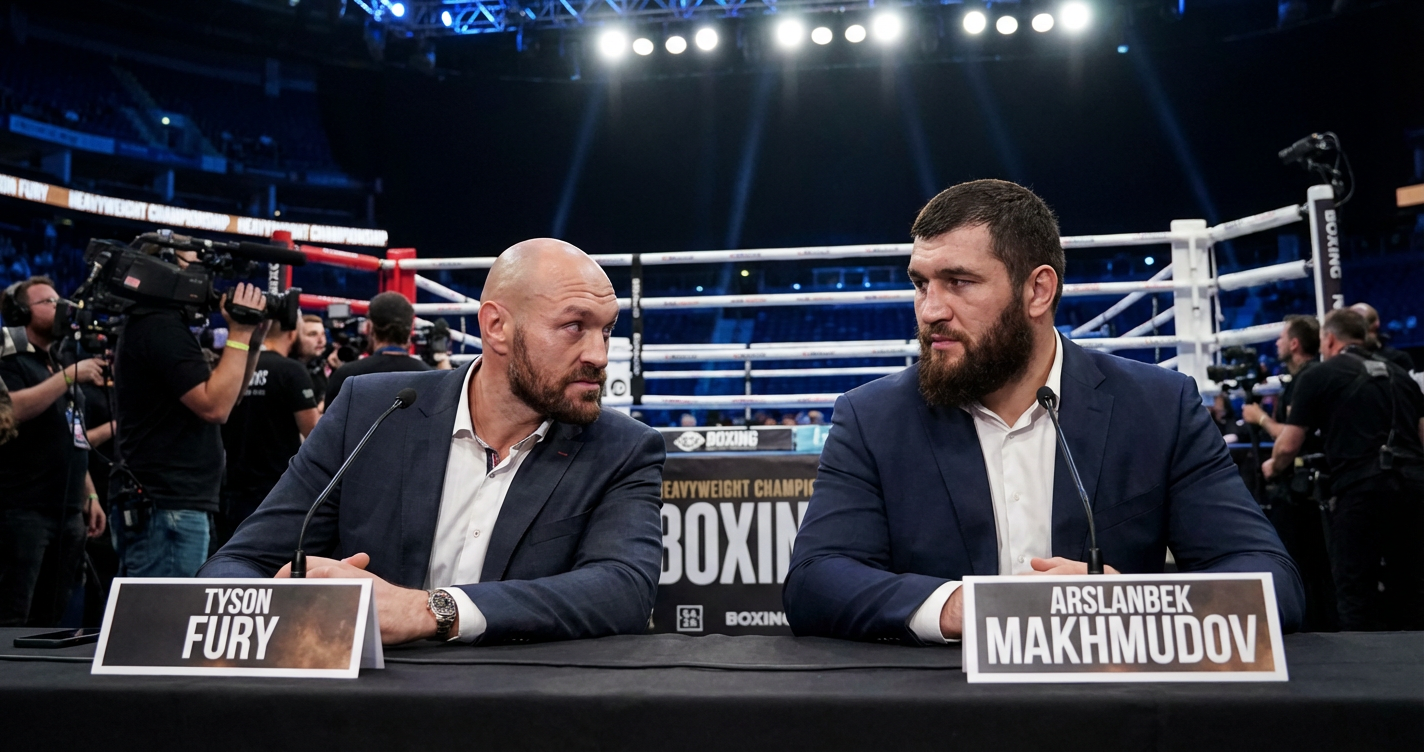
Tyson Fury is set to return to the boxing ring for a high-stakes heavyweight encounter, ending a lengthy period of inactivity that has sparked intense debate among fans and analysts. The former unified heavyweight champion, often referred to as the “Gypsy King,” has been sidelined since a high-profile loss that saw him lose his remaining world titles. That defeat left a shadow over a career that many thought might have already reached its conclusion.
His opponent, Arslanbek Makhmudov, arrives as a dangerous hurdle for a veteran trying to find his rhythm after such a long time away from the sport. While Fury is generally regarded as the favorite by most observers, the physical wear and tear of a long career at the highest level, combined with the lack of recent rounds, adds a significant layer of unpredictability to this heavyweight clash.
Technical Mastery Facing Bludgeoning Power
The tactical battle is expected to be a classic contrast between elite boxing intelligence and immense physical strength. Fury, a massive figure even by heavyweight standards, has long relied on his unique ability to move and react like a much smaller man. His success has historically been built on feints, erratic movement, and an ability to switch stances that keeps opponents guessing and out of range.
However, questions have surfaced regarding whether he can still maintain that pace over the distance. Some veteran observers, including Teddy Atlas, have questioned the work rate of Tyson Fury ahead of his upcoming appearances. After a significant period away from a competitive ring, his conditioning will be under intense scrutiny. If his footwork has slowed even a fraction, he could be forced into a stationary battle that plays directly into his opponent’s hands.
Makhmudov is a powerful contender who has built a reputation on his ability to end fights with a single blow. The Russian powerhouse brings forward pressure and a disciplined guard, prioritizing closing the distance over technical nuance. Unlike many of Fury’s former rivals, Makhmudov is unlikely to be lured into a mental game of chess; he is expected to focus entirely on landing the heavy combinations that have defined his career so far.
The Impact of Long-Term Inactivity
The most significant variable in this match may not be Makhmudov’s winging hooks, but the months Fury has spent away from the lights. Boxing history is full of champions who returned from long breaks only to find that their timing was off and their reflexes were no longer sharp enough to avoid the heavy shots. While Fury has successfully navigated long layoffs before—most notably during the years preceding his famous trilogy matches—he is now much further along in his professional journey.
A victory here would do more than just add another win to his record; it could act as a catalyst for massive domestic matchups. There is already speculation that a successful performance could lead to a massive stadium event in the future, with some reports suggesting the possibility of Katie Taylor joining a card featuring Fury and Anthony Joshua. Such a mega-event remains a primary goal for the division’s powerbrokers.
Makhmudov’s path to victory involves testing Fury’s stamina early. If he can turn the opening minutes into a physical struggle, he might be able to exhaust the older man. However, Makhmudov has often shown defensive lapses, and a sharp version of Fury would likely find openings as the Russian moves into range.
Tactical Outlook and Division Impact
Looking at the match strategically, the odds generally favor the more experienced former champion. For those assessing the bout, the later rounds are particularly interesting. As a power puncher like Makhmudov begins to tire from chasing a more mobile target, the opportunities for a systematic breakdown usually increase. Many analysts expect that a methodical approach from Fury could lead to a late-round stoppage as his opponent’s output drops.
This fight also places a spotlight on the veteran class of the heavyweight division. In many ways, it mirrors the interest surrounding the recent Deontay Wilder victory over Derek Chisora, where established names are forced to prove they still belong near the top of the rankings while hungry contenders attempt to take their spot.
A convincing win for Fury would re-establish him as a legitimate threat to the current champions. Conversely, a poor performance would suggest that the era of his dominance is finally drawing to a close. The upcoming bout will provide a clear indication of exactly how much the former champion has left to give to the sport.