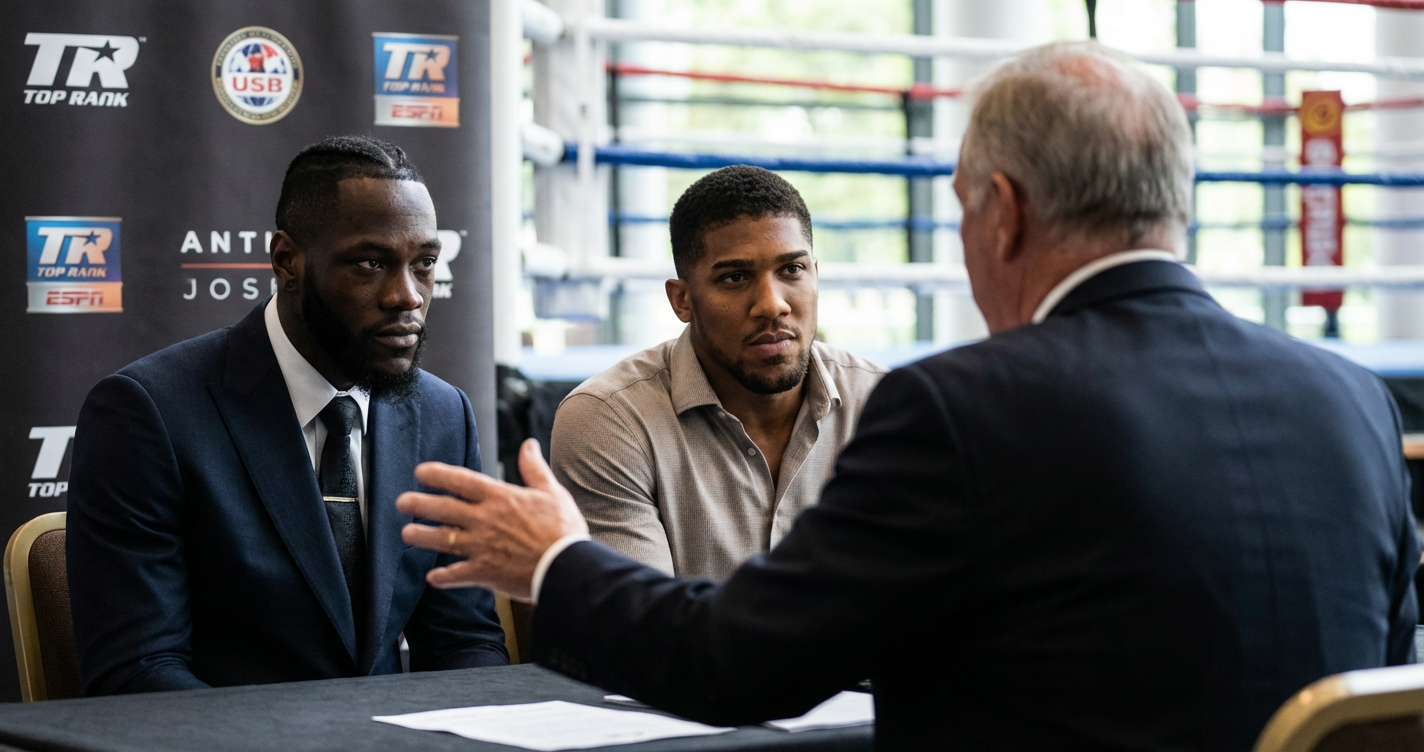
For several years, the heavyweight division has been haunted by the ghost of a fight that never happened. Deontay Wilder and Anthony Joshua, two of the biggest names in the sport and once the undisputed kings of the knockout, have spent much of their careers circling one another without ever stepping into the same ring. While both men have seen their status fluctuate and their world titles slip away, the appetite for a collision between the “Bronze Bomber” and “AJ” remains high among boxing fans.
The narrative surrounding this potential matchup has shifted from a battle for divisional supremacy to a high-stakes crossroads fight. In the current heavyweight economy, where significant investment from the Middle East has transformed how major bouts are brokered, the logistical barriers that reportedly derailed negotiations half a decade ago are no longer the primary obstacle. Instead, the question is now one of timing and risk management for two veterans looking to cement their respective legacies.
The Evolving Heavyweight Economy
It is no secret that the financial gravity of boxing has shifted. The interest in hosting the world’s biggest sporting events in new territories has already delivered fights that previously appeared impossible. For Wilder and Joshua, this means the significant purses required to finalize such a fight are theoretically more accessible than they were during previous cycles of negotiation.
But the money is only half the battle. Both fighters are currently at a point where a loss would be devastating to their future title aspirations. Joshua has recently worked to reinvent himself as a more clinical, patient operator. His recent outings have shown flashes of the explosive form that made him a global superstar, though he remains wary of the single-punch power that Wilder famously possesses. For Wilder, who has faced recent setbacks against elite competition, a Joshua fight represents a major opportunity for redemption on the world stage.
Style Collisions and Technical Hurdles
Technically, the matchup remains one of the most discussed stylistic puzzles in the heavyweight ranks. Joshua is widely regarded as the more nuanced boxer, utilizing a stiff jab and refined footwork to set up his power shots. He carries a decorated amateur pedigree that typically gives him an edge in technical exchanges and ring generalship.
Wilder, by contrast, is known as the great equalizer. Even when behind on the cards, he carries the type of power that can end a contest in an instant. While critics argue that Wilder has struggled when unable to find his rhythm early, his ability to land his signature right hand remains a significant variable. Joshua has shown vulnerability in the past when caught clean, and his ability to withstand a puncher of Wilder’s caliber remains a central talking point in any potential matchup.
Reports from various training circles suggest that both teams recognize the unique threats involved. Joshua’s side has previously noted Wilder’s unorthodox movement as a specific challenge, while voices from Wilder’s camp have questioned Joshua’s resilience when under sustained pressure in the later rounds.
Barriers to the Contract
If the public interest remains high and the funding is available, the question remains as to why the contract has not been finalized. The answer often lies in mandatory obligations and the shifting priorities of the major sanctioning bodies. With heavyweight titles frequently tied up in rematches or mandatory defenses, finding a window where both Wilder and Joshua are simultaneously available has proven difficult.
Furthermore, both fighters must weigh the risks of “stay-busy” bouts. A loss to a lower-ranked opponent could effectively diminish the commercial value of a Wilder-Joshua showdown. History in the division is littered with examples of unexpected upsets derailing plans for mega-fights, forcing promoters back to the drawing board. Both camps are aware that they are one punch away from losing a massive career-defining opportunity.
And then there is the matter of promotional alignment. Despite the professional respect often shown in public, the long-standing rivalries between major promotional houses have historically made negotiations complex. While neutral intermediaries have acted as a buffer in recent years, the fine print regarding broadcast rights, ring walks, and billing order can take months to resolve.
The Closing Window
The time frame for this fight is narrowing. Heavyweights rarely stay at the peak of their physical powers indefinitely, and both men have logged significant rounds against top-tier opposition. If the fight does not materialize in the relative near future, it risks falling into the “too late” category—a fight that fans would still watch, but one that may have lost its peak competitive edge.
For the sport of boxing, a Wilder-Joshua fight is more than just a lucrative gate; it is a test of whether the modern era can deliver on its biggest promises. Fans have grown weary of social media callouts that lead to nothing. They want the best to face the best while both are still relevant in the title conversation. Whether the Bronze Bomber and AJ can finally settle their differences in the ring remains one of the most persistent questions in the heavyweight landscape.
As the division continues to move forward, with new contenders emerging and the championship picture evolving, the path to this specific clash must be cleared soon. If promotional stakeholders can finally align their interests, the sport may yet see one of the most anticipated heavyweight encounters of the decade.