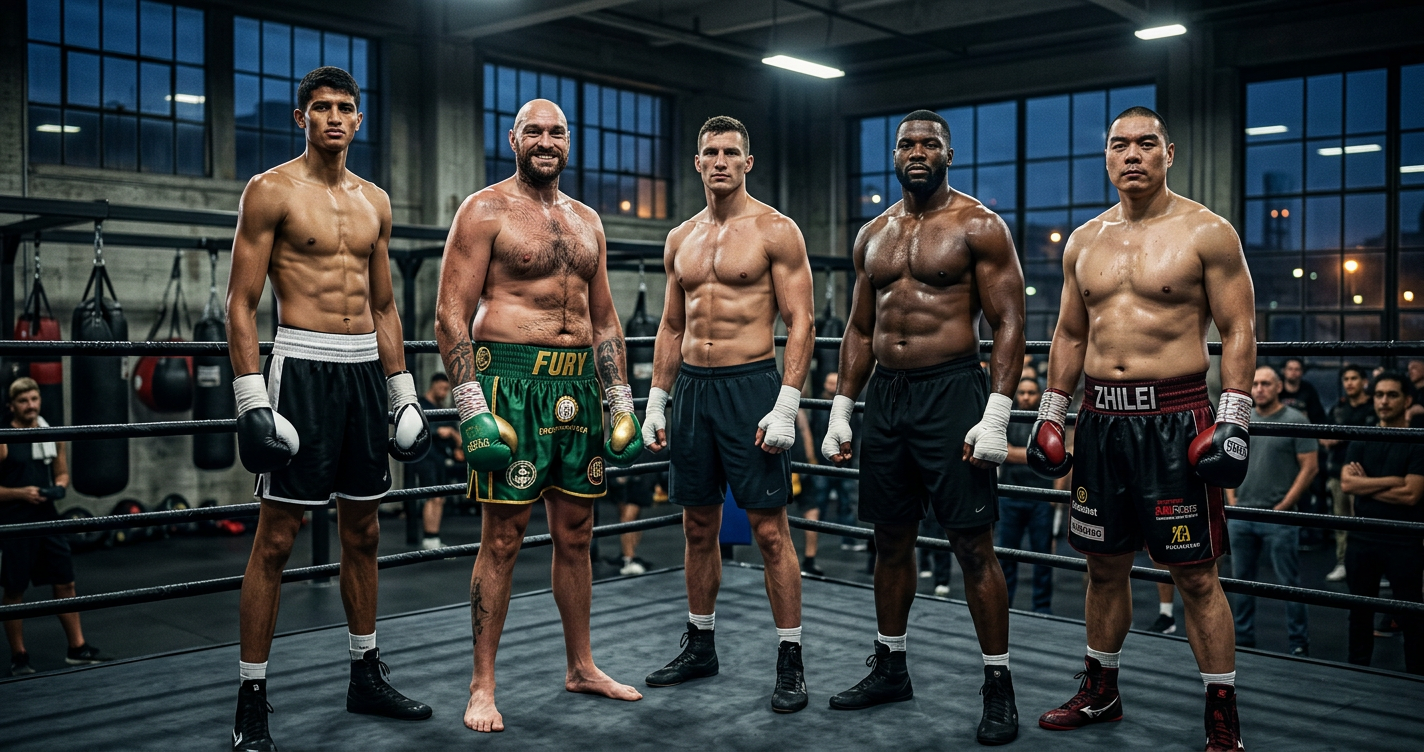
The traditional image of a boxing champion usually involves a stocky, compact powerhouse or a lean, long-limbed middleweight. However, the current era of professional boxing has seen a physical shift that defies history. We are living in a period where physical dimensions are being stretched to their absolute limits, and “towering” has become a literal job description for some of the sport’s most successful titleholders.
In divisions where height was once a standard five-foot-ten or six-foot, we now see athletes who look more like small forwards in the NBA than traditional pugilists. This shift isn’t just about intimidation; it is a tactical evolution. Training methods and nutritional science have allowed taller fighters to maintain the stamina and speed required to keep their belts, making them a nightmare for shorter, more compact opponents trying to “get inside.”
Sebastian Fundora and the Super Welterweight Outlier
There is perhaps no more striking visual in modern boxing than Sebastian Fundora. Standing well over six and a half feet tall while competing in the 154-pound super welterweight division, his presence in the ring feels almost like a physiological anomaly. Fundora creates a logistical puzzle for every opponent he faces. To punch up at a target that high requires an immense amount of energy and specific neck strength, and the reach disadvantage is often insurmountable.
But Fundora doesn’t always fight like a tall man. He has faced criticism and praise in equal measure for his willingness to engage in “phone booth” battles, negating his own reach to trade shots at close range. It’s a high-risk style that has made him one of the most entertaining champions to watch, even if his trainers might prefer he used his jab more frequently. Following his recent high-stakes victories, he remains the gold standard for height-to-weight ratios in the sport.
Heavyweight Goliaths: Fury and Zhang
The heavyweight division has always been home to the giants, but the current crop of champions and top-tier titleholders is exceptionally large. Tyson Fury has defined the last decade of the division not just with his weight, but with a frame that stands nearly 6’9″. Fury’s ability to move that frame with the grace of a lightweight is what separated him from the “statuesque” heavyweights of the past. He uses his height as a defensive tool, leaning back to make punches miss by a fraction of an inch while maintaining a leverage advantage on his own shots.
Joining the top flight of the heavyweights is Zhilei Zhang. While perhaps a fraction shorter than Fury, his massive frame and southpaw stance make him a physically imposing presence for anyone in the top ten. Zhang’s success late in his career has proven that a massive reach and a heavy lead hand can overcome the speed advantages of younger, smaller heavyweights. His recent performances have solidified the idea that in the current landscape, bigger is often better.
Height as a Strategic Weapon in Lower Classes
Beyond the heavyweights and Fundora, we see champions like those in the light heavyweight and cruiserweight divisions using verticality to dominate. When a champion stands several inches taller than the divisional average, they dictate the “gas tank” of the fight. A shorter opponent must constantly exert energy just to get into range, feinting and lunging, while the taller champion can often reset with a single step back.
And it’s not just about the reach. Being the taller fighter allows for a distinct advantage in the clinch. High-level champions know how to lean their weight on smaller opponents during tie-ups, a subtle tactic that drains the legs of the shorter man over the course of twelve rounds. By the championship rounds, that height difference often manifests as a fatigue difference.
The Evolution of the Tall Fighter
Historically, “tall and lanky” was often synonymous with “glass chin” or “lack of power.” That narrative has been thoroughly dismantled by the current crop of world champions. Modern strength and conditioning programs allow tall fighters to build functional density without losing the flexibility needed to avoid shots. They are no longer just targets; they are mobile, powerful, and tactically sound.
Looking ahead, the scouting departments of major promotional companies are clearly leaning into this trend. The “Fundora blueprint” — finding massive frames that can safely make lower weights — has become a sought-after commodity. As long as these champions continue to find success by keeping their opponents at the end of a long jab, the average height of world titleholders is only likely to go in one direction.
For the shorter contenders, the mission remains the same as it was in the days of Mike Tyson or Joe Frazier: get low, cut the ring off, and target the body. But against this current crop of sky-scraping champions, that task has never looked more daunting.