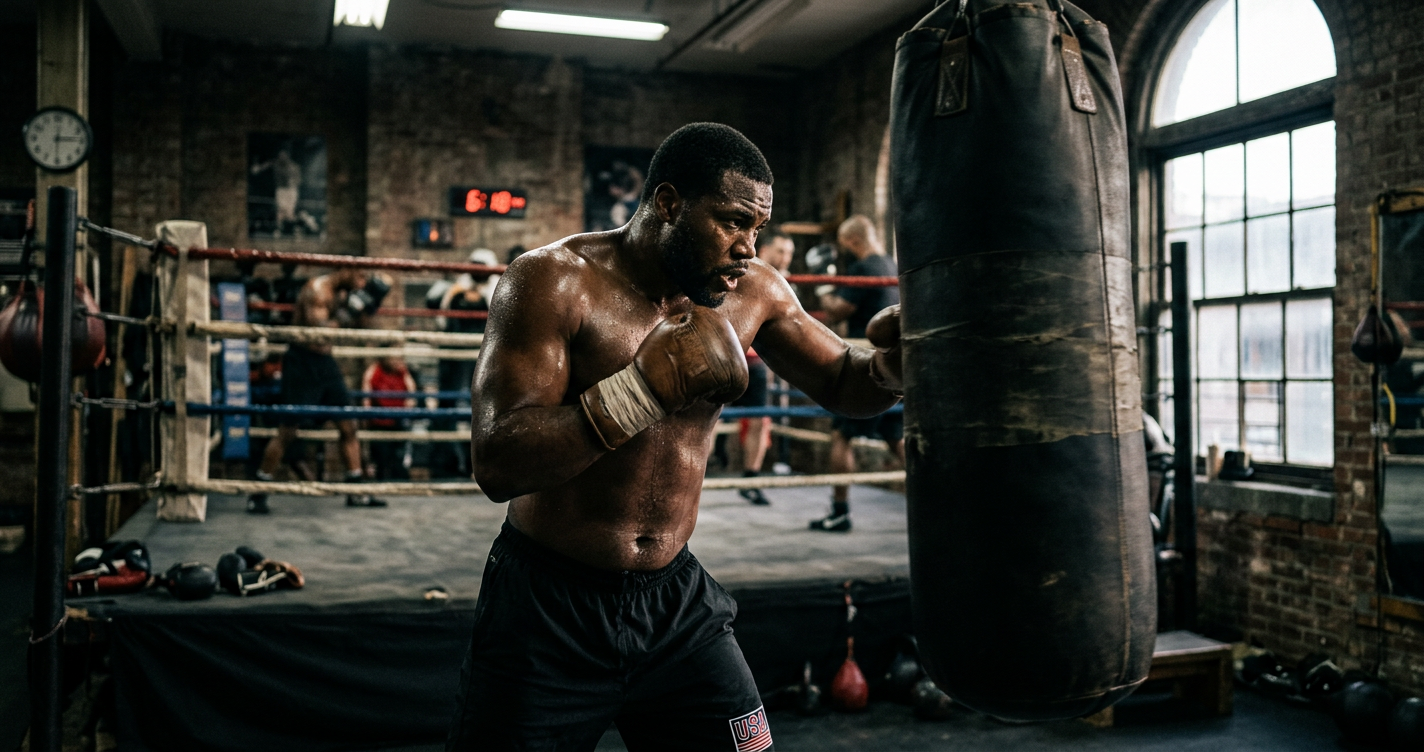
The heavyweight division, traditionally the crown jewel of the sweet science, is enjoying a global renaissance. Stadiums in Riyadh and London are selling out in minutes, and the undisputed championship has finally been unified. But for American boxing fans, this golden era carries a bitter aftertaste. While the big men are back in the spotlight, the United States — once the undisputed factory of heavyweight legends — finds itself relegated to the role of a spectator.
For decades, the heavyweight champion of the world was often the most famous athlete in America. From Joe Louis to Muhammad Ali, and Larry Holmes to Mike Tyson, the lineage was almost exclusively domestic. Today, the landscape is unrecognizable. The power center has shifted decisively to Eastern Europe and the United Kingdom, leaving a vacuum in the U.S. that many observers fear may never be filled again.
The vanishing American contender
The current state of the U.S. heavyweight scene isn’t just a slump; it’s a systemic drought. When looking at the top of the rankings, the flags next to the names of the elite mostly represent Ukraine, Great Britain, and New Zealand. Deontay Wilder, the “Bronze Bomber,” carried the American flag almost single-handedly for five years. But after a series of bruising encounters and a recent dip in activity and form, the search for his successor has turned up few immediate answers.
Promoters and analysts have pointed to a “brain drain” that has plagued the sport for twenty years. In the mid-20th century, a 6-foot-5, 240-pound athlete with elite explosion almost certainly found his way into a boxing gym. Now, that same athlete is more likely to be steered toward a scholarship in the NFL or an NBA developmental program. The financial incentives and lower barrier to entry in team sports have stripped boxing of its most gifted physical specimens.
And it’s not just about the athletes. The grassroots infrastructure — the local gyms in cities like Detroit, Philadelphia, and St. Louis — has thinned out. The cost of insurance, the rise of MMA as a competing combat sport, and the lack of a clear promotional path for young heavyweights have made the “old school” route to the top nearly obsolete.
Infrastructure and the amateur bottleneck
The decline is perhaps most visible in the Olympic pipeline. The U.S. hasn’t won a gold medal in the super-heavyweight division since Tyrell Biggs in 1984. This isn’t a lack of talent so much as a lack of refinement. American heavyweights are often entering the professional ranks with a fraction of the amateur experience seen in their European counterparts.
While fighters in the UK benefit from the massive backing of Matchroom or Queensberry and a public that treats boxing as a mainstream cultural event, American prospects are often fighting on undercards in half-empty ballrooms. Without the consistent television exposure of the HBO and Showtime eras, it’s difficult for a young American heavyweight to build the “brand” required to attract the massive purses necessary to keep them in the sport.
But there are glimmers of a shift. The influx of Middle Eastern investment has changed the economics of the division. While it has moved the biggest fights away from Las Vegas and New York, it has also injected a level of capital into the sport that could, theoretically, trickle down to the development of new talent if managed correctly.
Can the heavyweight scene be revived?
To save American heavyweight boxing, the industry has to stop waiting for another Mike Tyson to simply appear. The “savior” narrative hasn’t worked. Instead, some promoters are looking toward a more European model: deeper scouting of college athletes who didn’t quite make the NFL, and providing them with the technical coaching required to transition to boxing in their early 20s.
There are a few names currently in the pipeline—undefeated prospects with high knockout ratios and some collegiate athletic backgrounds. However, the path to a world title is longer than ever. The gulf between a “prospect” and a “contender” is massive, and most American heavyweights are currently being fed a diet of journeymen that doesn’t prepare them for the technical mastery of the world’s elite.
The reality is that heavyweight boxing is a global game now. The U.S. will likely never regain the monopoly it held in the 1970s and 80s. That doesn’t mean the scene is “terminal,” but it does mean it requires a radical structural overhaul. Without a centralized developmental program or a significant return of boxing to terrestrial, free-to-air television, the American heavyweight may remain an endangered species.
Whether the U.S. can produce a champion capable of capturing the public imagination again remains the biggest question in the sport. For now, American fans are forced to look across the Atlantic to see the “Baddest Man on the Planet.”