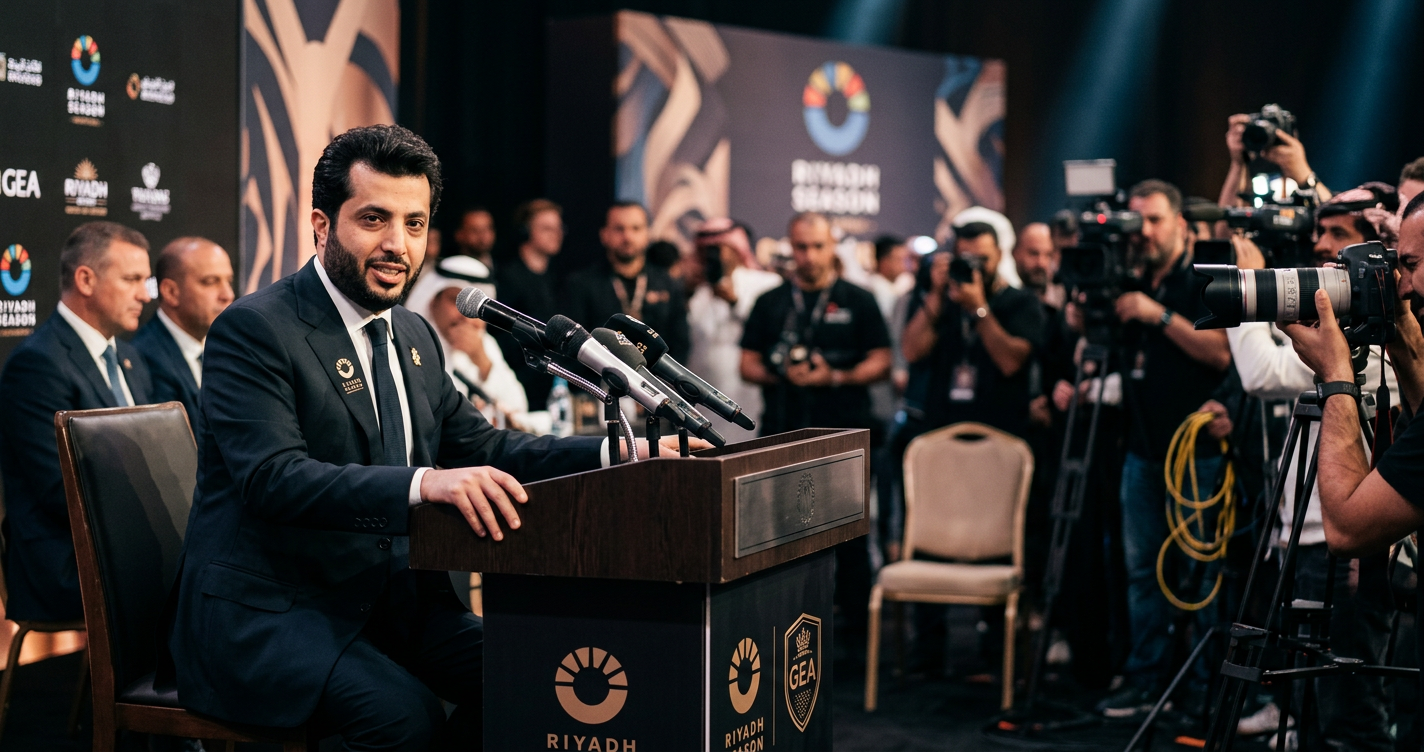
Turki Alalshikh has never been one for subtlety, and his latest public comments suggest he has little patience for the skepticism still surrounding his overhaul of the professional boxing landscape. The chairman of Saudi Arabia’s General Entertainment Authority (GEA) has reportedly issued a blunt response to critics who doubt the long-term sustainability or the competitive integrity of the “Riyadh Season” era.
Since the GEA began pouring billions into the sport, the traditional power structures of boxing have been upended. What was once a fractured industry defined by promotional rivalries and “ducking” has become a streamlined machine capable of making the sport’s biggest fights in record time. Yet, a vocal minority of commentators and traditionalists continue to question whether this high-spending model is a temporary bubble or a genuine fix for a broken sport.
Alalshikh dismisses the traditionalist critique
In recent remarks shared across social media and through official channels, Alalshikh mocked the idea that his intervention is anything other than a rescue mission for a sport that was previously “dying.” He has frequently pointed to the fact that major champions are now fighting consistently, often appearing on the same cards in “stacked” events that were unthinkable just five years ago.
The core of Alalshikh’s argument is simple: the fans are getting what they want. While promoters like Eddie Hearn and Frank Warren have found common ground under the Riyadh Season umbrella, some observers worry that the centralization of power in Saudi Arabia could leave the sport vulnerable if the GEA ever decides to pivot its interests elsewhere. Alalshikh has met these concerns with a mixture of humor and defiance, suggesting that those who complain are often the ones who benefitted from the previous era of inactivity and protected records.
Breaking the promotional deadlock
The “blunt response” from the Saudi official comes at a time when the boxing calendar is busier than ever. By offering purses that traditional pay-per-view models struggled to match, Alalshikh has effectively forced the hands of the sport’s top stars. Historically, major bouts would take years to marinate, often passing their expiration date before any contracts were signed. Now, the turnaround from suggestion to stadium announcement is often measured in weeks.
But the criticisms Alalshikh is addressing aren’t just about money. Some analysts argue that the move away from traditional boxing hubs like Las Vegas, London, and New York is stripping the sport of its atmosphere. Alalshikh has countered this by pointing to the global reach of the events and the technical quality of the broadcasts, which have set a new industry standard for production value.
The 5v5 model and the future of matchmaking
One of the most praised, yet scrutinized, innovations has been the “5v5” format, where rival promotional houses pit their best fighters against one another. It is a concept Alalshikh has championed to prove that the best should fight the best regardless of network or promotional ties. This aggressive matchmaking has silenced many on-paper critics, but the financial scale of these events remains the point of contention for those waiting for the “bubble” to burst.
Alalshikh’s response to these “doubts” suggests that the GEA’s roadmap for boxing is measured in decades, not years. He has spoken openly about his desire to create a unified league or a central governing body that could finally provide the sport with a clear, season-based structure similar to the UFC or the NFL.
What lies ahead for Riyadh Season
As the boxing world looks toward the second half of 2024 and into 2025, the pressure is on to maintain this momentum. The skepticism Alalshikh mocks is largely rooted in the fear of the unknown. Never before has a single entity held this much sway over the heavyweight, light-heavyweight, and domestic divisions simultaneously.
For now, the results are difficult to argue with. The fights are happening, the athletes are being paid career-high sums, and the transparency regarding officiating and judging at these events has generally been viewed as an improvement over the status quo. If Alalshikh continues to deliver the match-ups that fans have spent years asking for, the “doubts” he so pointedly mocks will likely fade into the background. But in a sport as volatile as boxing, the critics will always be waiting for the first sign of a slip-up.
The bluntness of his recent communication serves as a reminder: Turki Alalshikh isn’t here to play by the old rules, and he certainly isn’t interested in the approval of the old guard.